Boiler Replacement Cost When Cover Excludes Major Parts
Many homeowners take out boiler cover expecting it to protect them from significant heating system expenses. While cover can provide valuable support for repairs and maintenance, it is important to understand that not every policy covers every component.

Why you can trust our content
We understand that the boiler industry can be confusing, with plenty of outdated or misleading information. That’s why we rely only on trusted, proven sources to guide our advice and installations:
At a glance
One of the biggest surprises can occur when a major part fails and the policy excludes its replacement. In some situations, homeowners discover that a repair is either uneconomical or not covered, leading them to consider replacing the entire boiler instead.
Understanding how policy exclusions can influence the overall boiler replacement cost is essential when evaluating the value of boiler cover and planning for the future.
Why Do Boiler Cover Policies Have Exclusions?
Boiler cover is designed to reduce risk, but providers cannot cover every possible issue without limitations.
Exclusions are commonly used to manage:
- High-value repairs
- Ageing appliances
- Obsolete components
- Pre-existing faults
- Wear and tear
- System upgrades
While exclusions are a normal part of many policies, homeowners should understand them before relying on cover as their primary protection strategy.
Which Major Boiler Components May Be Excluded?
The exact exclusions vary between providers, but some policies place restrictions on higher-value components.
Examples may include:
- Heat exchangers
- Printed circuit boards
- Pumps
- Fans
- Expansion vessels
- Specialist controls
In some cases, cover may contribute towards repairs but not fully cover replacement costs.
This is why reading the policy documentation carefully is so important.
What Happens If a Major Part Cannot Be Repaired?
When a significant component fails, several outcomes are possible.
An engineer may determine that:
- The part can be repaired
- The part can be replaced
- The part is obsolete
- Replacement is not economically viable
If replacement parts are unavailable or the repair becomes disproportionate compared to the age of the boiler, a full replacement may be recommended.
At this stage, homeowners often begin evaluating the likely boiler replacement cost rather than the repair expense alone.
Why Do Older Boilers Face Greater Challenges?
As boilers age, sourcing replacement parts can become increasingly difficult.
Manufacturers may discontinue:
- Specific components
- Older boiler models
- Legacy control systems
As a result, even a relatively small fault can become more complicated if the required part is no longer readily available.
Older boilers may also become less efficient, making replacement a more attractive long-term option.
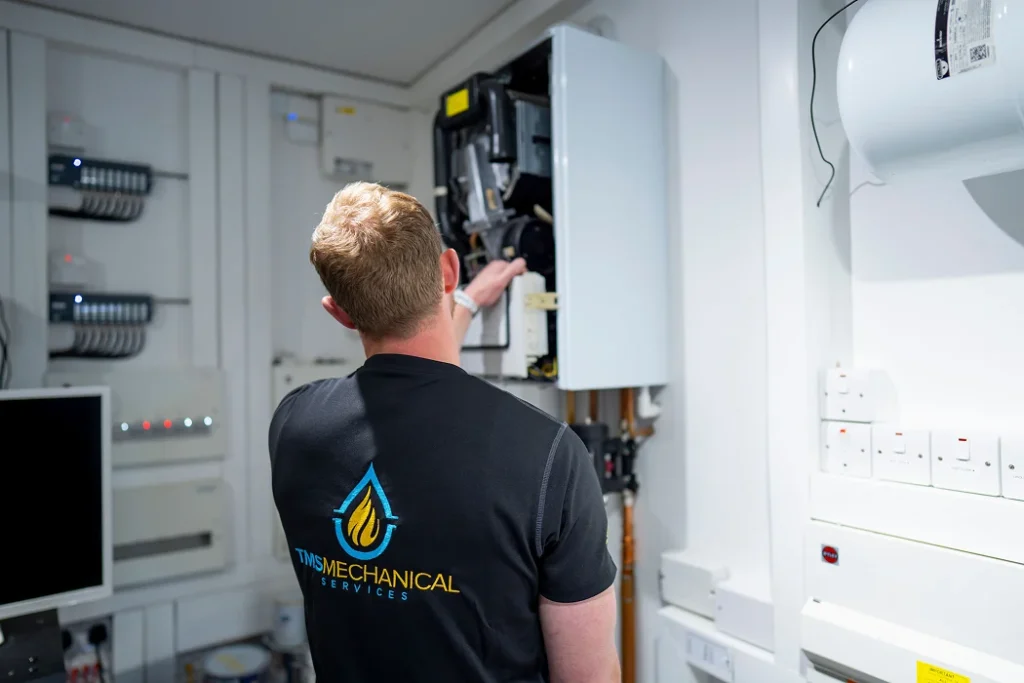
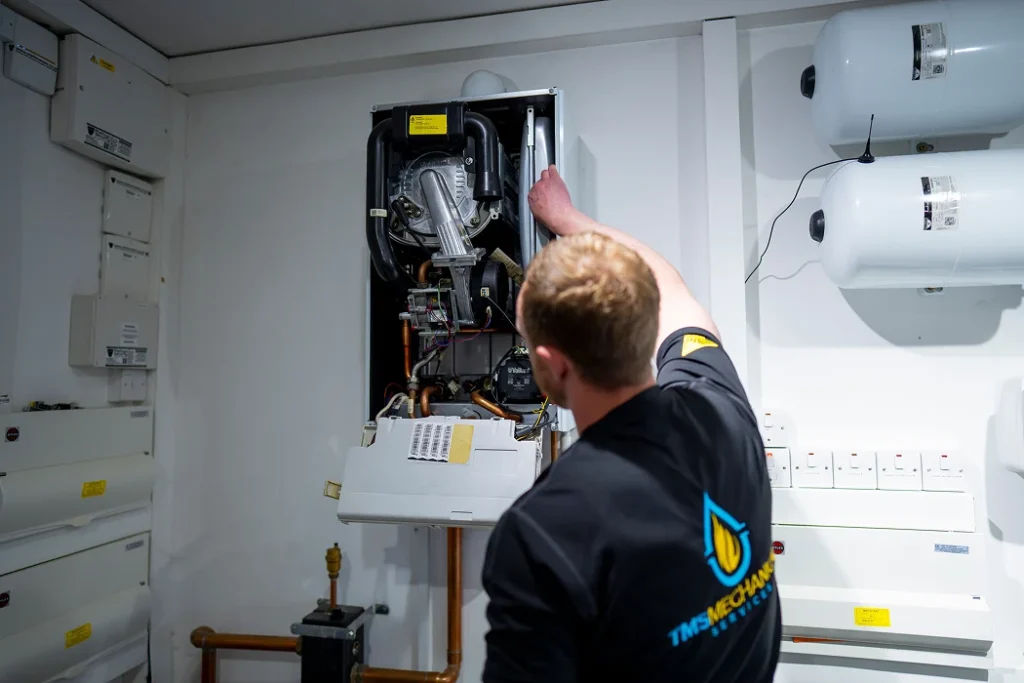
If you’re unsure whether an ageing boiler is worth repairing, contact TMS Mechanical Services for professional advice and an honest assessment.
Does Boiler Cover Guarantee a Repair?
What If the Fault Falls Outside the Policy?
Not all faults are covered.
Common exclusions can include:
- Pre-existing problems
- Corrosion damage
- Poor maintenance
- Cosmetic issues
- Certain major components
If the fault falls outside the policy terms, the homeowner may be responsible for the full repair or replacement expense.
What If the Boiler Is Beyond Economic Repair?
Many policies contain clauses relating to economic repair limits.
This means that if repair costs exceed a certain threshold, replacement may not be covered.
Instead, homeowners may need to fund part or all of the installation themselves.
What type of boiler do you currently have?

Combi Boiler

Regular Boiler

System Boiler

Back Boiler
It just takes 60 seconds
And then you can book a free consultation
How Can Cover Affect Replacement Decisions?
Boiler cover can still provide value even when major exclusions apply.
For example, cover may:
- Help identify faults early
- Include annual servicing
- Cover smaller repairs
- Reduce maintenance expenses
However, homeowners should understand that cover is not necessarily a substitute for planning future replacement costs.
Every boiler will eventually reach the end of its practical lifespan.
What Factors Influence Boiler Replacement Costs?
Several elements affect the overall cost of replacing a boiler.
| Factor | Influence on Cost |
| Boiler type | Different systems have different installation requirements |
| Property size | Larger homes may require higher outputs |
| System upgrades | Additional work may be necessary |
| Controls | Modern controls can affect costs |
| Pipework modifications | Existing layouts may require changes |
| Installation complexity | Labour requirements vary |
Because every property is different, professional surveys are typically the best way to obtain accurate quotations.
Is Boiler Cover Still Worth Having?
The answer depends on individual circumstances.
For many households, cover provides reassurance through:
- Emergency assistance
- Repair support
- Annual servicing
- Budget predictability
However, understanding limitations remains essential.
Comparing the likely gas boiler cover cost against the potential benefits can help homeowners determine whether a policy aligns with their expectations.
A Typical Homeowner Scenario
Imagine a homeowner with a twelve-year-old boiler that has operated reliably for many years.
Following a breakdown, an engineer discovers that a major component has failed. Unfortunately, the part is no longer readily available and the repair would be expensive even if sourcing were possible.
Although the homeowner has boiler cover, the failed component falls within an exclusion category.
The discussion quickly shifts from repair options to replacement planning.
This example highlights why understanding policy exclusions before a fault occurs is so important.
What Questions Should You Ask Before Purchasing Cover?
Are Major Components Included?
Always ask for clarification regarding high-value parts.
Key questions include:
- Which components are covered?
- Are repair limits applied?
- Are replacement parts included?
- Are exclusions clearly listed?
Does the Policy Cover Older Boilers?
Some providers apply restrictions to ageing systems.
These may include:
- Higher premiums
- Reduced protection
- Inspection requirements
- Component exclusions
Understanding these conditions can help avoid future disappointment.
How Does Regular Servicing Help?
Annual servicing remains one of the best ways to protect a boiler throughout its lifespan.
Benefits include:
- Earlier fault detection
- Improved efficiency
- Safer operation
- Better reliability
- Identification of ageing components
Even when cover is in place, servicing plays a crucial role in reducing the likelihood of unexpected breakdowns.
Should You Repair or Replace an Older Boiler?
When Repairing May Be Sensible
Repairing may remain practical when:
- Parts are available
- Costs are reasonable
- The boiler remains efficient
- Fault history is limited
When Replacement May Be the Better Option
Replacement may be worth considering if:
- Major components fail repeatedly
- Parts are obsolete
- Efficiency has declined
- Repair costs continue increasing
In these situations, focusing on the long-term value of a new installation may provide greater benefits than continuing to invest in an ageing system.
How Can Homeowners Prepare for Future Costs?
Regardless of whether cover is in place, it is sensible to plan ahead.
Practical steps include:
- Maintaining annual servicing
- Monitoring boiler performance
- Reviewing warranty documentation
- Understanding policy exclusions
- Budgeting for eventual replacement
This approach helps reduce financial surprises and supports informed decision-making.
Comparing the gas boiler cover cost against future maintenance and replacement planning can provide a more balanced perspective on overall heating system ownership.
Need guidance on whether to repair, maintain or replace your boiler? Speak to TMS Mechanical Services for practical support and professional recommendations.
Conclusion
Boiler cover can provide valuable protection, but it is important to understand its limitations. Exclusions relating to major components can significantly affect repair outcomes and may influence whether replacement becomes necessary.
When evaluating the potential boiler replacement cost, homeowners should look beyond monthly premiums and review exactly what a policy includes. Understanding exclusions, maintaining regular servicing and planning ahead can help ensure there are fewer surprises if a major fault occurs.
For expert support with boiler servicing, repairs and replacement planning, contact TMS Mechanical Services. Our experienced team can help you make informed decisions about the future of your heating system.
Related articles


What type of boiler do you currently have?
Combi Boiler
Regular Boiler
System Boiler
Back Boiler
At a glance
One of the biggest surprises can occur when a major part fails and the policy excludes its replacement. In some situations, homeowners discover that a repair is either uneconomical or not covered, leading them to consider replacing the entire boiler instead.
Understanding how policy exclusions can influence the overall boiler replacement cost is essential when evaluating the value of boiler cover and planning for the future.
Why Do Boiler Cover Policies Have Exclusions?
Boiler cover is designed to reduce risk, but providers cannot cover every possible issue without limitations.
Exclusions are commonly used to manage:
- High-value repairs
- Ageing appliances
- Obsolete components
- Pre-existing faults
- Wear and tear
- System upgrades
While exclusions are a normal part of many policies, homeowners should understand them before relying on cover as their primary protection strategy.
Which Major Boiler Components May Be Excluded?
The exact exclusions vary between providers, but some policies place restrictions on higher-value components.
Examples may include:
- Heat exchangers
- Printed circuit boards
- Pumps
- Fans
- Expansion vessels
- Specialist controls
In some cases, cover may contribute towards repairs but not fully cover replacement costs.
This is why reading the policy documentation carefully is so important.
What Happens If a Major Part Cannot Be Repaired?
When a significant component fails, several outcomes are possible.
An engineer may determine that:
- The part can be repaired
- The part can be replaced
- The part is obsolete
- Replacement is not economically viable
If replacement parts are unavailable or the repair becomes disproportionate compared to the age of the boiler, a full replacement may be recommended.
At this stage, homeowners often begin evaluating the likely boiler replacement cost rather than the repair expense alone.
Why Do Older Boilers Face Greater Challenges?
As boilers age, sourcing replacement parts can become increasingly difficult.
Manufacturers may discontinue:
- Specific components
- Older boiler models
- Legacy control systems
As a result, even a relatively small fault can become more complicated if the required part is no longer readily available.
Older boilers may also become less efficient, making replacement a more attractive long-term option.
If you’re unsure whether an ageing boiler is worth repairing, contact TMS Mechanical Services for professional advice and an honest assessment.
Does Boiler Cover Guarantee a Repair?
What If the Fault Falls Outside the Policy?
Not all faults are covered.
Common exclusions can include:
- Pre-existing problems
- Corrosion damage
- Poor maintenance
- Cosmetic issues
- Certain major components
If the fault falls outside the policy terms, the homeowner may be responsible for the full repair or replacement expense.
What If the Boiler Is Beyond Economic Repair?
Many policies contain clauses relating to economic repair limits.
This means that if repair costs exceed a certain threshold, replacement may not be covered.
Instead, homeowners may need to fund part or all of the installation themselves.
What type of boiler do you currently have?
Combi Boiler
Regular Boiler
System Boiler
Back Boiler
It just takes 60 seconds
And then you can book a free consultation
How Can Cover Affect Replacement Decisions?
Boiler cover can still provide value even when major exclusions apply.
For example, cover may:
- Help identify faults early
- Include annual servicing
- Cover smaller repairs
- Reduce maintenance expenses
However, homeowners should understand that cover is not necessarily a substitute for planning future replacement costs.
Every boiler will eventually reach the end of its practical lifespan.
What Factors Influence Boiler Replacement Costs?
Several elements affect the overall cost of replacing a boiler.
| Factor | Influence on Cost |
| Boiler type | Different systems have different installation requirements |
| Property size | Larger homes may require higher outputs |
| System upgrades | Additional work may be necessary |
| Controls | Modern controls can affect costs |
| Pipework modifications | Existing layouts may require changes |
| Installation complexity | Labour requirements vary |
Because every property is different, professional surveys are typically the best way to obtain accurate quotations.
Is Boiler Cover Still Worth Having?
The answer depends on individual circumstances.
For many households, cover provides reassurance through:
- Emergency assistance
- Repair support
- Annual servicing
- Budget predictability
However, understanding limitations remains essential.
Comparing the likely gas boiler cover cost against the potential benefits can help homeowners determine whether a policy aligns with their expectations.
A Typical Homeowner Scenario
Imagine a homeowner with a twelve-year-old boiler that has operated reliably for many years.
Following a breakdown, an engineer discovers that a major component has failed. Unfortunately, the part is no longer readily available and the repair would be expensive even if sourcing were possible.
Although the homeowner has boiler cover, the failed component falls within an exclusion category.
The discussion quickly shifts from repair options to replacement planning.
This example highlights why understanding policy exclusions before a fault occurs is so important.
What Questions Should You Ask Before Purchasing Cover?
Are Major Components Included?
Always ask for clarification regarding high-value parts.
Key questions include:
- Which components are covered?
- Are repair limits applied?
- Are replacement parts included?
- Are exclusions clearly listed?
Does the Policy Cover Older Boilers?
Some providers apply restrictions to ageing systems.
These may include:
- Higher premiums
- Reduced protection
- Inspection requirements
- Component exclusions
Understanding these conditions can help avoid future disappointment.
How Does Regular Servicing Help?
Annual servicing remains one of the best ways to protect a boiler throughout its lifespan.
Benefits include:
- Earlier fault detection
- Improved efficiency
- Safer operation
- Better reliability
- Identification of ageing components
Even when cover is in place, servicing plays a crucial role in reducing the likelihood of unexpected breakdowns.
Should You Repair or Replace an Older Boiler?
When Repairing May Be Sensible
Repairing may remain practical when:
- Parts are available
- Costs are reasonable
- The boiler remains efficient
- Fault history is limited
When Replacement May Be the Better Option
Replacement may be worth considering if:
- Major components fail repeatedly
- Parts are obsolete
- Efficiency has declined
- Repair costs continue increasing
In these situations, focusing on the long-term value of a new installation may provide greater benefits than continuing to invest in an ageing system.
How Can Homeowners Prepare for Future Costs?
Regardless of whether cover is in place, it is sensible to plan ahead.
Practical steps include:
- Maintaining annual servicing
- Monitoring boiler performance
- Reviewing warranty documentation
- Understanding policy exclusions
- Budgeting for eventual replacement
This approach helps reduce financial surprises and supports informed decision-making.
Comparing the gas boiler cover cost against future maintenance and replacement planning can provide a more balanced perspective on overall heating system ownership.
Need guidance on whether to repair, maintain or replace your boiler? Speak to TMS Mechanical Services for practical support and professional recommendations.
Conclusion
Boiler cover can provide valuable protection, but it is important to understand its limitations. Exclusions relating to major components can significantly affect repair outcomes and may influence whether replacement becomes necessary.
When evaluating the potential boiler replacement cost, homeowners should look beyond monthly premiums and review exactly what a policy includes. Understanding exclusions, maintaining regular servicing and planning ahead can help ensure there are fewer surprises if a major fault occurs.
For expert support with boiler servicing, repairs and replacement planning, contact TMS Mechanical Services. Our experienced team can help you make informed decisions about the future of your heating system.
Related articles
What type of boiler do you currently have?
Combi Boiler
Regular Boiler
System Boiler
Back Boiler