Boiler Prices and Installation: Why Bathrooms, Showers and Flow Rate Matter
Comparing boiler prices can seem simple until you start looking at what is actually included in an installation. The boiler itself is only one part of the overall project, and the requirements of your home can have a noticeable effect on the final figure.

Why you can trust our content
We understand that the boiler industry can be confusing, with plenty of outdated or misleading information. That’s why we rely only on trusted, proven sources to guide our advice and installations:

At a glance
Bathrooms, shower usage, household size and incoming water flow can all influence which boiler is suitable. The installation may also require changes to pipework, controls, flues or other components.
Understanding these factors can make it easier to assess the cost for boiler installation and compare quotations on a like-for-like basis.
Why do boiler installation prices vary between homes?
No two boiler replacements are exactly the same.
A straightforward replacement in the same position may involve relatively limited work. A more complicated installation can require additional materials, system changes or relocation.
The main factors include:
- Boiler type
- Boiler output
- Hot water demand
- Number of bathrooms
- Incoming water flow
- Existing pipework
- Boiler location
- Flue requirements
- Heating controls
- Removal of the existing system
This is why a price seen online or quoted for another property may have little relevance to your own installation.
When considering the cost for boiler installation, look at the complete job rather than the appliance price alone.
If you are planning a boiler replacement, TMS Mechanical Services can assess your property and explain which installation requirements are likely to affect the final price.
How do bathrooms affect boiler requirements?
The number of bathrooms can provide an indication of potential hot water demand.
A home with one bathroom may have a fairly predictable routine. A property with two bathrooms may experience much higher demand if several people shower at the same time.
However, bathroom numbers do not tell the whole story.
Consider two homes with identical layouts. In the first, the second bathroom is rarely used. In the second, two family members regularly shower simultaneously every morning.
The second property may need a system capable of handling greater simultaneous demand.
This can affect the type of boiler selected and therefore the overall installation cost.
Does shower use influence boiler selection?
Yes. Showers can place significant demand on a hot water system, especially powerful or frequently used showers.
Combi boilers heat water directly from the mains, so their performance depends partly on the available water flow and pressure.
If the incoming supply is restricted, a high-output combi boiler cannot simply create additional mains water.
This is why a proper assessment should consider both the boiler and the property’s water supply.
A household expecting strong shower performance should discuss its requirements before deciding which appliance to install.
What type of boiler do you currently have?

Combi Boiler
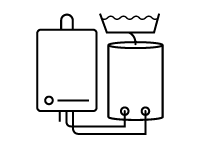
Regular Boiler
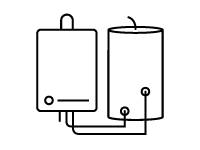
System Boiler
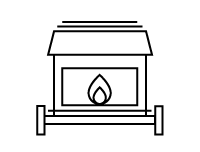
Back Boiler
It just takes 60 seconds
And then you can book a free consultation
What is flow rate and why does it matter?
Flow rate refers to the volume of water passing through the system over a particular period.
For a combi boiler, flow rate is particularly important because hot water is heated as it passes through the appliance.
If the mains supply can provide a strong flow, the boiler may be able to deliver a good hot water experience. If the supply is limited, the available flow at the shower or tap may also be limited.
| Factor | Effect on hot water |
| Mains flow | Determines how much water reaches the boiler |
| Water pressure | Influences the available supply |
| Boiler output | Determines how quickly water can be heated |
| Shower demand | Affects the amount of hot water required |
| Number of outlets | Determines potential simultaneous demand |
| Incoming water temperature | Affects the energy needed to heat water |
Understanding these relationships is useful when assessing boiler prices and installation.
Does a larger boiler always cost more?
A larger output may affect the appliance price, but selecting a bigger boiler simply because it sounds more powerful is not necessarily sensible.
The boiler needs to be appropriately sized for the property.
For heating, the required output depends on the building and its heat loss. For hot water, particularly with a combi, the required output also relates to the desired flow rate and incoming water conditions.
Oversizing can add unnecessary expense, while undersizing may leave the system struggling during periods of high demand.
A professional assessment is therefore more useful than choosing a boiler based on a simple rule such as “bigger is better”.
What is included in boiler prices and installation?
When comparing boiler prices and installation, check exactly what each quotation includes.
A complete quotation may cover:
- Boiler and relevant accessories
- Installation labour
- Flue components
- Heating controls
- Condensate connections
- Gas and heating pipework adjustments
- Removal of the old boiler
- System preparation
- Commissioning
- Warranty information
Not every installation requires all of these items, so the quotation should be specific to the property.
If a price seems unusually low, check whether important work has simply been excluded.
TMS Mechanical Services can explain the components included in a proposed installation so you can compare quotations more confidently and understand what the price covers.
Can changing boiler type increase the installation cost?
Potentially.
Replacing a combi with another combi in the same location can be relatively straightforward.
Changing from a combi to a system boiler, however, may require a hot water cylinder and additional pipework. Moving from a traditional system to a combi can also involve removing or altering existing components.
These changes can affect both labour and material requirements.
That does not mean changing boiler type is a bad idea. If the household’s hot water requirements have changed, a different system may provide a better long-term solution.
Does moving the boiler affect the price?
Yes.
Relocating a boiler can introduce additional work. Depending on the new position, the installer may need to alter heating and water pipework, adjust the flue, change condensate drainage and make good around the old location.
The practical benefits of moving the boiler should therefore be weighed against the additional installation requirements.
If the existing location is suitable, keeping the boiler there may provide a simpler replacement.
What about heating controls?
Controls are another part of the overall installation that should not be overlooked.
A modern boiler can be paired with appropriate controls to help manage heating schedules and room temperature more effectively.
Depending on the system, this could include a programmable thermostat, room thermostat or smart control.
When comparing the cost for boiler installation, check whether the proposed controls are included and whether they are compatible with the boiler.
How can you compare boiler installation costs properly?
The best approach is to compare the full specification rather than the headline price.
Ask each installer:
- Which boiler model is being proposed?
- What is its heating output?
- What is its hot water flow rate?
- Has the mains water supply been assessed?
- Are controls included?
- Is the old boiler being removed?
- Are pipework changes included?
- Is the flue included?
- What warranty is provided?
- Are there any potential additional charges?
This helps ensure you are comparing similar installations.
What does a typical family home example look like?
Consider a three-bedroom property with one main bathroom and a separate shower room. The family often uses both showers during the morning.
The homeowners initially assume that replacing the existing combi with a higher-output model will solve their hot water concerns.
An installer checks the incoming mains flow and discovers that the water supply is an important limitation. Rather than promising that a larger boiler will automatically fix the issue, the installer explains the realistic options.
This is an important part of understanding the cost for boiler installation. Paying more for a larger appliance does not necessarily deliver better performance if another part of the system is limiting the result.
When should you request a professional assessment?
A professional assessment is particularly useful when:
- The current boiler struggles with hot water.
- Several bathrooms are used regularly.
- Shower performance is disappointing.
- The boiler is being relocated.
- You are changing boiler type.
- The existing system is old.
- You are unsure which boiler output is appropriate.
An installer can identify factors that are difficult to judge from a boiler brochure or online price comparison.
Related articles

What type of boiler do you currently have?
Combi Boiler
Regular Boiler
System Boiler
Back Boiler
At a glance
Bathrooms, shower usage, household size and incoming water flow can all influence which boiler is suitable. The installation may also require changes to pipework, controls, flues or other components.
Understanding these factors can make it easier to assess the cost for boiler installation and compare quotations on a like-for-like basis.
Why do boiler installation prices vary between homes?
No two boiler replacements are exactly the same.
A straightforward replacement in the same position may involve relatively limited work. A more complicated installation can require additional materials, system changes or relocation.
The main factors include:
- Boiler type
- Boiler output
- Hot water demand
- Number of bathrooms
- Incoming water flow
- Existing pipework
- Boiler location
- Flue requirements
- Heating controls
- Removal of the existing system
This is why a price seen online or quoted for another property may have little relevance to your own installation.
When considering the cost for boiler installation, look at the complete job rather than the appliance price alone.
If you are planning a boiler replacement, TMS Mechanical Services can assess your property and explain which installation requirements are likely to affect the final price.
How do bathrooms affect boiler requirements?
The number of bathrooms can provide an indication of potential hot water demand.
A home with one bathroom may have a fairly predictable routine. A property with two bathrooms may experience much higher demand if several people shower at the same time.
However, bathroom numbers do not tell the whole story.
Consider two homes with identical layouts. In the first, the second bathroom is rarely used. In the second, two family members regularly shower simultaneously every morning.
The second property may need a system capable of handling greater simultaneous demand.
This can affect the type of boiler selected and therefore the overall installation cost.
Does shower use influence boiler selection?
Yes. Showers can place significant demand on a hot water system, especially powerful or frequently used showers.
Combi boilers heat water directly from the mains, so their performance depends partly on the available water flow and pressure.
If the incoming supply is restricted, a high-output combi boiler cannot simply create additional mains water.
This is why a proper assessment should consider both the boiler and the property’s water supply.
A household expecting strong shower performance should discuss its requirements before deciding which appliance to install.
What type of boiler do you currently have?
Combi Boiler
Regular Boiler
System Boiler
Back Boiler
It just takes 60 seconds
And then you can book a free consultation
What is flow rate and why does it matter?
Flow rate refers to the volume of water passing through the system over a particular period.
For a combi boiler, flow rate is particularly important because hot water is heated as it passes through the appliance.
If the mains supply can provide a strong flow, the boiler may be able to deliver a good hot water experience. If the supply is limited, the available flow at the shower or tap may also be limited.
| Factor | Effect on hot water |
| Mains flow | Determines how much water reaches the boiler |
| Water pressure | Influences the available supply |
| Boiler output | Determines how quickly water can be heated |
| Shower demand | Affects the amount of hot water required |
| Number of outlets | Determines potential simultaneous demand |
| Incoming water temperature | Affects the energy needed to heat water |
Understanding these relationships is useful when assessing boiler prices and installation.
Does a larger boiler always cost more?
A larger output may affect the appliance price, but selecting a bigger boiler simply because it sounds more powerful is not necessarily sensible.
The boiler needs to be appropriately sized for the property.
For heating, the required output depends on the building and its heat loss. For hot water, particularly with a combi, the required output also relates to the desired flow rate and incoming water conditions.
Oversizing can add unnecessary expense, while undersizing may leave the system struggling during periods of high demand.
A professional assessment is therefore more useful than choosing a boiler based on a simple rule such as “bigger is better”.
What is included in boiler prices and installation?
When comparing boiler prices and installation, check exactly what each quotation includes.
A complete quotation may cover:
- Boiler and relevant accessories
- Installation labour
- Flue components
- Heating controls
- Condensate connections
- Gas and heating pipework adjustments
- Removal of the old boiler
- System preparation
- Commissioning
- Warranty information
Not every installation requires all of these items, so the quotation should be specific to the property.
If a price seems unusually low, check whether important work has simply been excluded.
TMS Mechanical Services can explain the components included in a proposed installation so you can compare quotations more confidently and understand what the price covers.
Can changing boiler type increase the installation cost?
Potentially.
Replacing a combi with another combi in the same location can be relatively straightforward.
Changing from a combi to a system boiler, however, may require a hot water cylinder and additional pipework. Moving from a traditional system to a combi can also involve removing or altering existing components.
These changes can affect both labour and material requirements.
That does not mean changing boiler type is a bad idea. If the household’s hot water requirements have changed, a different system may provide a better long-term solution.
Does moving the boiler affect the price?
Yes.
Relocating a boiler can introduce additional work. Depending on the new position, the installer may need to alter heating and water pipework, adjust the flue, change condensate drainage and make good around the old location.
The practical benefits of moving the boiler should therefore be weighed against the additional installation requirements.
If the existing location is suitable, keeping the boiler there may provide a simpler replacement.
What about heating controls?
Controls are another part of the overall installation that should not be overlooked.
A modern boiler can be paired with appropriate controls to help manage heating schedules and room temperature more effectively.
Depending on the system, this could include a programmable thermostat, room thermostat or smart control.
When comparing the cost for boiler installation, check whether the proposed controls are included and whether they are compatible with the boiler.
How can you compare boiler installation costs properly?
The best approach is to compare the full specification rather than the headline price.
Ask each installer:
- Which boiler model is being proposed?
- What is its heating output?
- What is its hot water flow rate?
- Has the mains water supply been assessed?
- Are controls included?
- Is the old boiler being removed?
- Are pipework changes included?
- Is the flue included?
- What warranty is provided?
- Are there any potential additional charges?
This helps ensure you are comparing similar installations.
What does a typical family home example look like?
Consider a three-bedroom property with one main bathroom and a separate shower room. The family often uses both showers during the morning.
The homeowners initially assume that replacing the existing combi with a higher-output model will solve their hot water concerns.
An installer checks the incoming mains flow and discovers that the water supply is an important limitation. Rather than promising that a larger boiler will automatically fix the issue, the installer explains the realistic options.
This is an important part of understanding the cost for boiler installation. Paying more for a larger appliance does not necessarily deliver better performance if another part of the system is limiting the result.
When should you request a professional assessment?
A professional assessment is particularly useful when:
- The current boiler struggles with hot water.
- Several bathrooms are used regularly.
- Shower performance is disappointing.
- The boiler is being relocated.
- You are changing boiler type.
- The existing system is old.
- You are unsure which boiler output is appropriate.
An installer can identify factors that are difficult to judge from a boiler brochure or online price comparison.
Related articles
What type of boiler do you currently have?
Combi Boiler
Regular Boiler
System Boiler
Back Boiler