Boiler Repair or Replacement: What to Do When Your Heating Becomes Unreliable
A boiler that starts losing pressure, making unusual noises or struggling to provide consistent heat can quickly become a household concern. The immediate question is often whether to repair the existing appliance or replace it altogether.

Why you can trust our content
We understand that the boiler industry can be confusing, with plenty of outdated or misleading information. That’s why we rely only on trusted, proven sources to guide our advice and installations:

At a glance
There is no universal answer. The right decision depends on the boiler’s age, condition, fault, repair history and the likely cost of keeping it in service.
For homeowners dealing with boiler repair chelmsford issues, getting the problem properly assessed before making a decision can help avoid spending money on a repair that only provides a short-term solution.
If your boiler is becoming unreliable, contact TMS Mechanical Services for practical advice and an assessment of the issue before deciding whether repair or replacement makes more sense.
When is a boiler repair usually worth considering?
A repair can make sense when the boiler is relatively modern, the fault is straightforward and the appliance has otherwise been reliable.
For example, a single component may have failed while the rest of the boiler remains in good condition. In this situation, replacing the faulty component may restore normal operation without requiring a full system upgrade.
Repair may be particularly reasonable when:
- The boiler has been reliable until the recent fault
- The problem has a clearly identifiable cause
- Replacement parts are available
- The repair cost is proportionate to the boiler’s age
- The appliance has been maintained properly
- There are no signs of wider deterioration
The important point is to consider the boiler as a whole rather than judging the decision from one fault alone.
When should you start thinking about replacement?
Replacement becomes more worth considering when faults are becoming frequent or repair costs are increasing.
An older boiler may continue to operate after repeated repairs, but the cost and inconvenience can start to outweigh the benefits of keeping it.
Signs that replacement may deserve consideration include:
- Repeated breakdowns
- Increasing repair bills
- Difficulty finding replacement parts
- Persistent pressure problems
- Frequent loss of heating or hot water
- Poor reliability during colder weather
- A boiler approaching the end of its expected service life
- Significant changes in household heating requirements
This does not mean an older boiler automatically needs replacing. A qualified installer should assess the condition and explain the realistic options.
What type of boiler do you currently have?

Combi Boiler
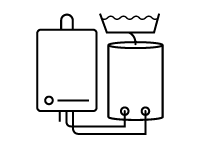
Regular Boiler
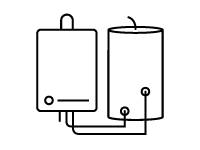
System Boiler

Back Boiler
It just takes 60 seconds
And then you can book a free consultation
How does the age of the boiler affect the decision?
Age is useful context, but it should not be the only factor.
A well-maintained older boiler may continue working reliably, while a relatively newer appliance can develop a significant fault.
However, as an appliance gets older, parts may become harder to source and multiple components may begin to require attention.
The decision should therefore consider:
| Factor | Repair may make sense | Replacement may make sense |
| Boiler age | Relatively recent | Older appliance |
| Fault | Isolated problem | Repeated or major faults |
| Repair history | Limited | Frequent |
| Parts | Readily available | Difficult to source |
| Cost | Reasonable | Increasing |
| Reliability | Generally good | Frequently unreliable |
| Household needs | Unchanged | Heating demand has changed |
This gives a broader picture than looking at the repair bill alone.
Can repeated repairs become a false economy?
They can.
If a boiler has developed several different faults over a relatively short period, paying for another repair may only postpone the need for replacement.
For example, repairing one failed component may restore operation, but another component could fail later. That does not mean every repair is a waste of money, but the overall history should be considered.
A boiler repair decision should therefore include an honest assessment of the appliance’s condition and expected reliability.
Ask the engineer whether the fault appears isolated or whether there are signs that the boiler is generally deteriorating.
What does the repair cost tell you?
The repair price matters, but it should be compared with the age and condition of the appliance.
A modest repair on a reliable boiler can be sensible. A significant repair on an ageing appliance may be harder to justify if other components are also showing signs of wear.
You should also consider how often the boiler has needed attention recently.
If the appliance has required several callouts, the combined cost may be more relevant than the latest individual repair bill.
Homeowners searching for boiler repair chelmsford should therefore focus on diagnosis and long-term reliability rather than simply finding the cheapest immediate fix.
Could a repair improve an inefficient boiler?
A repair can restore normal operation when a fault is causing poor performance. However, repairing a component does not necessarily transform an older boiler into a modern one.
If an appliance is significantly older, replacement may offer an opportunity to improve reliability and system controls as well.
That does not mean replacement should be recommended automatically. The existing boiler should first be assessed to determine whether the problem can reasonably be resolved.
A professional diagnosis is particularly useful when the homeowner is unsure whether the fault is temporary or part of a wider pattern.
TMS Mechanical Services can assess the problem and explain whether repair or replacement is likely to be the more practical option for your heating system.
What should you do if the boiler breaks down repeatedly?
Start by keeping a record of the problems.
Note:
- When the boiler stopped working
- What symptoms appeared
- Any fault codes displayed
- Whether pressure dropped
- How often the issue occurred
- What repairs have already been completed
- How much previous repairs have cost
This information can help an engineer identify patterns.
If the boiler has already required several repairs, give the installer or heating engineer as much history as possible. It may help determine whether another repair is sensible or whether replacement deserves consideration.
Does the type of fault matter?
Very much. Some faults can be relatively straightforward to diagnose and repair, while others may indicate a more significant problem.
Homeowners should avoid attempting to diagnose or repair gas appliance faults themselves.
If you notice unusual noises, repeated shutdowns, a persistent fault code, loss of heating or another problem, arrange an assessment by an appropriately qualified professional.
Do not remove covers or interfere with gas components in an attempt to investigate the problem yourself.
How should you compare repair with replacement?
A useful comparison should look beyond the immediate price.
Consider:
- Current repair cost
How much will the proposed repair cost? - Boiler age
How old is the appliance? - Repair history
How often has it broken down? - Parts availability
Are components still readily available? - Expected reliability
Is the boiler likely to remain dependable? - Replacement cost
What would a suitable replacement installation cost? - Household requirements
Has your heating or hot water demand changed? - Future maintenance
Is continued repair likely to become increasingly expensive?
This approach gives you a more realistic view of the decision.
A typical household example
Imagine a homeowner with an older combi boiler that has been reliable for many years. A single component fails and the engineer identifies a straightforward repair at a reasonable cost.
In this situation, repairing the appliance may be perfectly sensible.
Now imagine another household with an older boiler that has needed several repairs over the last two years. The latest fault is significant, and the engineer explains that other components are also showing signs of wear.
Although another repair might restore operation, the homeowner may reasonably decide that replacing the boiler provides a more predictable long-term solution.
The difference is the overall condition and repair history, not simply the latest fault.
Should you repair a boiler before selling your home?
This depends on the condition of the appliance and the circumstances of the sale.
If the boiler has a minor fault and is otherwise reliable, repairing it may be the practical choice. If the appliance is old and repeatedly failing, replacement could provide greater reassurance to a buyer, although the cost and likely return should be considered carefully.
Homeowners preparing to sell should also make sure relevant documentation and servicing records are available.
What should you ask before approving a repair?
Before agreeing to work, ask the engineer:
- What has caused the fault?
- Is the diagnosis confirmed?
- What will the repair involve?
- How much will it cost?
- Are replacement parts available?
- Is the fault likely to recur?
- How old is the boiler?
- Are there other signs of deterioration?
- Would replacement be worth considering?
You do not need to decide immediately if the situation is not urgent. Understanding the options can help you make a more informed choice.
When is replacement the more practical route?
Replacement can make sense when repair costs are becoming disproportionate to the boiler’s age and condition.
It may also be appropriate when the appliance is repeatedly unreliable, parts are difficult to obtain or the household’s heating requirements have changed.
A replacement should be treated as a planned installation rather than simply buying the first available boiler.
The new appliance should be appropriately sized and installed by a suitably qualified professional.
If you are unsure whether another repair is worthwhile, speak to TMS Mechanical Services for expert guidance on the condition of your boiler and your replacement options.
Related articles

What type of boiler do you currently have?
Combi Boiler
Regular Boiler
System Boiler
Back Boiler
At a glance
There is no universal answer. The right decision depends on the boiler’s age, condition, fault, repair history and the likely cost of keeping it in service.
For homeowners dealing with boiler repair chelmsford issues, getting the problem properly assessed before making a decision can help avoid spending money on a repair that only provides a short-term solution.
If your boiler is becoming unreliable, contact TMS Mechanical Services for practical advice and an assessment of the issue before deciding whether repair or replacement makes more sense.
When is a boiler repair usually worth considering?
A repair can make sense when the boiler is relatively modern, the fault is straightforward and the appliance has otherwise been reliable.
For example, a single component may have failed while the rest of the boiler remains in good condition. In this situation, replacing the faulty component may restore normal operation without requiring a full system upgrade.
Repair may be particularly reasonable when:
- The boiler has been reliable until the recent fault
- The problem has a clearly identifiable cause
- Replacement parts are available
- The repair cost is proportionate to the boiler’s age
- The appliance has been maintained properly
- There are no signs of wider deterioration
The important point is to consider the boiler as a whole rather than judging the decision from one fault alone.
When should you start thinking about replacement?
Replacement becomes more worth considering when faults are becoming frequent or repair costs are increasing.
An older boiler may continue to operate after repeated repairs, but the cost and inconvenience can start to outweigh the benefits of keeping it.
Signs that replacement may deserve consideration include:
- Repeated breakdowns
- Increasing repair bills
- Difficulty finding replacement parts
- Persistent pressure problems
- Frequent loss of heating or hot water
- Poor reliability during colder weather
- A boiler approaching the end of its expected service life
- Significant changes in household heating requirements
This does not mean an older boiler automatically needs replacing. A qualified installer should assess the condition and explain the realistic options.
What type of boiler do you currently have?
Combi Boiler
Regular Boiler
System Boiler
Back Boiler
It just takes 60 seconds
And then you can book a free consultation
How does the age of the boiler affect the decision?
Age is useful context, but it should not be the only factor.
A well-maintained older boiler may continue working reliably, while a relatively newer appliance can develop a significant fault.
However, as an appliance gets older, parts may become harder to source and multiple components may begin to require attention.
The decision should therefore consider:
| Factor | Repair may make sense | Replacement may make sense |
| Boiler age | Relatively recent | Older appliance |
| Fault | Isolated problem | Repeated or major faults |
| Repair history | Limited | Frequent |
| Parts | Readily available | Difficult to source |
| Cost | Reasonable | Increasing |
| Reliability | Generally good | Frequently unreliable |
| Household needs | Unchanged | Heating demand has changed |
This gives a broader picture than looking at the repair bill alone.
Can repeated repairs become a false economy?
They can.
If a boiler has developed several different faults over a relatively short period, paying for another repair may only postpone the need for replacement.
For example, repairing one failed component may restore operation, but another component could fail later. That does not mean every repair is a waste of money, but the overall history should be considered.
A boiler repair decision should therefore include an honest assessment of the appliance’s condition and expected reliability.
Ask the engineer whether the fault appears isolated or whether there are signs that the boiler is generally deteriorating.
What does the repair cost tell you?
The repair price matters, but it should be compared with the age and condition of the appliance.
A modest repair on a reliable boiler can be sensible. A significant repair on an ageing appliance may be harder to justify if other components are also showing signs of wear.
You should also consider how often the boiler has needed attention recently.
If the appliance has required several callouts, the combined cost may be more relevant than the latest individual repair bill.
Homeowners searching for boiler repair chelmsford should therefore focus on diagnosis and long-term reliability rather than simply finding the cheapest immediate fix.
Could a repair improve an inefficient boiler?
A repair can restore normal operation when a fault is causing poor performance. However, repairing a component does not necessarily transform an older boiler into a modern one.
If an appliance is significantly older, replacement may offer an opportunity to improve reliability and system controls as well.
That does not mean replacement should be recommended automatically. The existing boiler should first be assessed to determine whether the problem can reasonably be resolved.
A professional diagnosis is particularly useful when the homeowner is unsure whether the fault is temporary or part of a wider pattern.
TMS Mechanical Services can assess the problem and explain whether repair or replacement is likely to be the more practical option for your heating system.
What should you do if the boiler breaks down repeatedly?
Start by keeping a record of the problems.
Note:
- When the boiler stopped working
- What symptoms appeared
- Any fault codes displayed
- Whether pressure dropped
- How often the issue occurred
- What repairs have already been completed
- How much previous repairs have cost
This information can help an engineer identify patterns.
If the boiler has already required several repairs, give the installer or heating engineer as much history as possible. It may help determine whether another repair is sensible or whether replacement deserves consideration.
Does the type of fault matter?
Very much. Some faults can be relatively straightforward to diagnose and repair, while others may indicate a more significant problem.
Homeowners should avoid attempting to diagnose or repair gas appliance faults themselves.
If you notice unusual noises, repeated shutdowns, a persistent fault code, loss of heating or another problem, arrange an assessment by an appropriately qualified professional.
Do not remove covers or interfere with gas components in an attempt to investigate the problem yourself.
How should you compare repair with replacement?
A useful comparison should look beyond the immediate price.
Consider:
- Current repair cost
How much will the proposed repair cost? - Boiler age
How old is the appliance? - Repair history
How often has it broken down? - Parts availability
Are components still readily available? - Expected reliability
Is the boiler likely to remain dependable? - Replacement cost
What would a suitable replacement installation cost? - Household requirements
Has your heating or hot water demand changed? - Future maintenance
Is continued repair likely to become increasingly expensive?
This approach gives you a more realistic view of the decision.
A typical household example
Imagine a homeowner with an older combi boiler that has been reliable for many years. A single component fails and the engineer identifies a straightforward repair at a reasonable cost.
In this situation, repairing the appliance may be perfectly sensible.
Now imagine another household with an older boiler that has needed several repairs over the last two years. The latest fault is significant, and the engineer explains that other components are also showing signs of wear.
Although another repair might restore operation, the homeowner may reasonably decide that replacing the boiler provides a more predictable long-term solution.
The difference is the overall condition and repair history, not simply the latest fault.
Should you repair a boiler before selling your home?
This depends on the condition of the appliance and the circumstances of the sale.
If the boiler has a minor fault and is otherwise reliable, repairing it may be the practical choice. If the appliance is old and repeatedly failing, replacement could provide greater reassurance to a buyer, although the cost and likely return should be considered carefully.
Homeowners preparing to sell should also make sure relevant documentation and servicing records are available.
What should you ask before approving a repair?
Before agreeing to work, ask the engineer:
- What has caused the fault?
- Is the diagnosis confirmed?
- What will the repair involve?
- How much will it cost?
- Are replacement parts available?
- Is the fault likely to recur?
- How old is the boiler?
- Are there other signs of deterioration?
- Would replacement be worth considering?
You do not need to decide immediately if the situation is not urgent. Understanding the options can help you make a more informed choice.
When is replacement the more practical route?
Replacement can make sense when repair costs are becoming disproportionate to the boiler’s age and condition.
It may also be appropriate when the appliance is repeatedly unreliable, parts are difficult to obtain or the household’s heating requirements have changed.
A replacement should be treated as a planned installation rather than simply buying the first available boiler.
The new appliance should be appropriately sized and installed by a suitably qualified professional.
If you are unsure whether another repair is worthwhile, speak to TMS Mechanical Services for expert guidance on the condition of your boiler and your replacement options.
Related articles
What type of boiler do you currently have?
Combi Boiler
Regular Boiler
System Boiler
Back Boiler