Combi Boiler Replacement Chelmsford: How Can You Avoid Surprises on Installation Day?
Planning a combi boiler replacement in Chelmsford? Learn what to check before installation day to avoid unexpected costs, delays and problems.

Why you can trust our content
We understand that the boiler industry can be confusing, with plenty of outdated or misleading information. That’s why we rely only on trusted, proven sources to guide our advice and installations:

At a glance
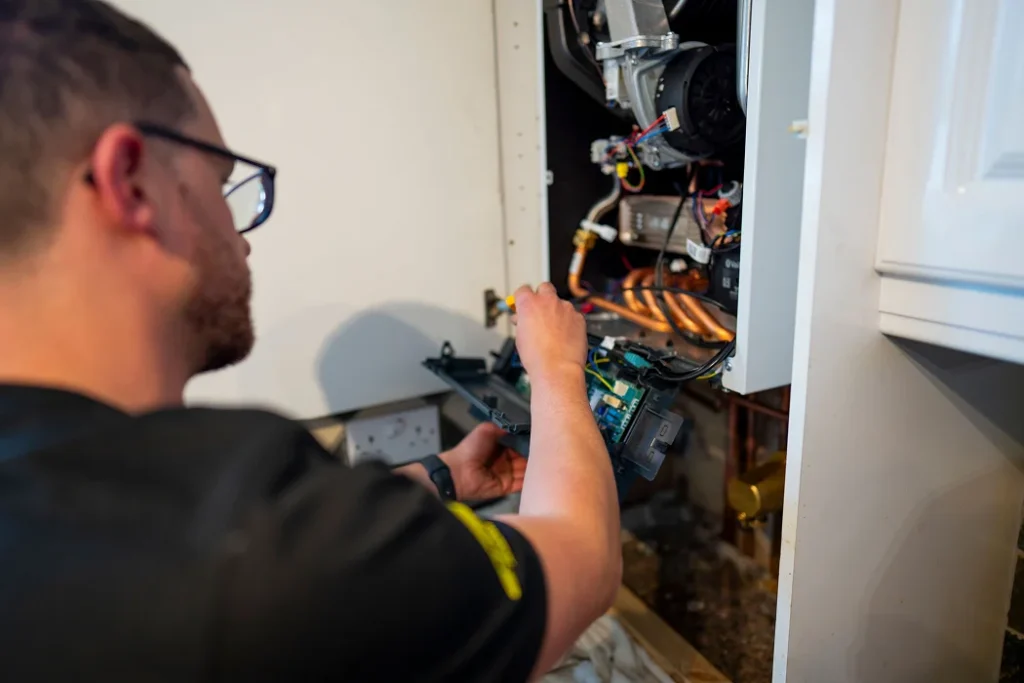
Replacing an old combi boiler can be a major improvement for a home, particularly when the existing appliance has become unreliable or inefficient. However, even a straightforward replacement can involve more than removing one boiler and fitting another.
The existing flue, pipework, controls, condensate drainage, boiler location and access all need to be considered. Understanding these details before the installation begins can help homeowners know what to expect and reduce the likelihood of unexpected issues.
For anyone arranging a combi boiler replacement chelmsford, a little preparation can make the installation process much clearer.
If your current combi boiler is approaching the end of its useful life, contact TMS Mechanical to discuss the existing system and what should be considered before arranging a replacement.
Why can a combi boiler replacement involve more than the boiler?
A combi boiler provides heating and hot water from a single appliance, but it relies on several connected components to operate correctly.
When replacing an older unit, the installer needs to consider how the proposed boiler will connect to the existing system. The replacement may have different connections, dimensions or control requirements from the appliance being removed.
The engineer may therefore assess:
- Existing pipework
- Gas supply
- Flue arrangement
- Condensate drainage
- Heating controls
- Electrical connections
- Boiler location
- Access around the appliance
- Existing heating system condition
A replacement can still be relatively straightforward, but the actual scope depends on the property.
What should be checked before installation day?
A proper assessment helps identify the main requirements before the old boiler is removed.
The engineer should have enough information to determine whether the proposed boiler is suitable for the location and existing heating system.
Important checks can include:
| Area | What may need checking |
|---|---|
| Boiler location | Space, access and suitability |
| Flue | Existing route and terminal arrangement |
| Pipework | Connections, condition and compatibility |
| Gas supply | Suitability for the proposed appliance |
| Condensate | Drainage route and connection |
| Controls | Existing and proposed control arrangements |
| Electrical supply | Connection and control requirements |
| Access | Space for removal and installation |
These checks can help distinguish a genuine like-for-like replacement from a project that requires additional preparation.
Can the new combi boiler stay in the same position?
Often, a replacement can remain in the existing location, but this should be confirmed rather than assumed.
Boiler dimensions can vary between models. Even when a new appliance fits within the same cupboard, the engineer still needs to consider connections, servicing access and the flue.
The surrounding space should also allow the engineer to carry out the installation safely and leave appropriate access for future servicing.
If the homeowner wants a different boiler position, this should be discussed before the quotation is finalised because moving the appliance can introduce additional work.
How can old pipework cause installation problems?
Existing pipework is an important part of a boiler replacement.
A modern replacement may require connections in different positions from the old appliance. The engineer may therefore need to alter some pipework to connect the new boiler correctly.
The condition of the existing pipework can also matter. If components are damaged, poorly arranged or unsuitable for the proposed installation, additional work may be required.
This does not mean every replacement involves extensive pipework changes. However, homeowners should understand that the existing system can affect the installation.
Does the flue need to be replaced?
The flue should be assessed as part of the boiler replacement.
It carries combustion products away from the appliance, so its arrangement needs to be appropriate for the new boiler. The existing flue may not simply be reusable because the new appliance could have different requirements.
The engineer will consider the route and terminal arrangement, along with the relationship between the flue and the new boiler position.
If the boiler is being moved, flue planning becomes particularly important.
If you are unsure whether your existing flue or boiler position is suitable, speak to TMS Mechanical before booking the installation. The team can explain what needs to be assessed.
Can heating controls cause problems on installation day?
Heating controls can be overlooked because they are separate from the boiler itself.
A new combi boiler may work with the existing controls, but this depends on the equipment and proposed system. Some homeowners may also want to upgrade their thermostat or control arrangement at the same time.
If a quotation does not clearly state which controls are included, ask before accepting it.
Knowing whether the existing thermostat will remain, be replaced or require modification can prevent confusion on installation day.
What about condensate drainage?
A modern combi boiler produces condensate that needs to be discharged correctly.
The installer will therefore check the existing condensate arrangement and determine whether it is suitable for the replacement boiler.
If the boiler is moved, the drainage route may need to change as well.
Because condensate pipes can sometimes be concealed or routed through difficult areas, it is worth discussing the arrangement during the assessment rather than waiting until installation begins.
What can affect boiler replacement cost?
The boiler replacement cost depends on more than the price of the appliance.
Factors can include:
- Boiler make and model
- Boiler output
- Installation location
- Flue requirements
- Pipework alterations
- Controls
- Condensate arrangements
- Access
- Removal and disposal of the existing boiler
- Additional installation materials
This is why online starting prices should be treated as a general guide rather than a guaranteed figure for an individual property.
The actual requirements need to be assessed before a reliable quotation can be prepared.
How can you avoid unexpected charges?
The best approach is to provide detailed information before the installation is booked.
Useful steps include:
- Photograph the existing boiler from several angles.
- Include the surrounding cupboard or wall area.
- Photograph the visible pipework.
- Take a picture of the thermostat and controls.
- Show the flue terminal where safely accessible.
- Explain any existing heating problems.
- Confirm whether the boiler will stay in the same position.
- Ask what is included in the quotation.
- Ask how additional work will be handled.
- Confirm the proposed boiler model.
The purpose is not to diagnose the installation yourself. Instead, these details give the installer a better starting point.
What if the boiler is being replaced because of repeated faults?
Repeated breakdowns can be a sign that a boiler is approaching the end of its practical service life, but replacement should not automatically be assumed to be the only option.
An engineer can assess the appliance and discuss whether repair or replacement is appropriate based on its age, condition, reliability and likely future requirements.
If replacement is chosen, explaining the history of faults can still be useful. It may help the installer understand why the homeowner wants a different boiler and whether there are wider heating issues worth considering.
What should a combi boiler replacement quotation include?
A clear quotation should explain the proposed work and the equipment being supplied.
Check whether it identifies:
| Quotation detail | Why it matters |
|---|---|
| Boiler model | Confirms exactly what is being supplied |
| Boiler output | Shows the selected appliance specification |
| Controls | Clarifies whether controls are included |
| Flue | Confirms what flue work is covered |
| Labour | Explains the installation scope |
| Removal | Confirms whether the old boiler will be removed |
| Disposal | Clarifies what happens to the old appliance |
| Testing | Confirms commissioning and testing arrangements |
| Additional work | Explains how unexpected requirements will be addressed |
This makes it easier to compare quotations and understand what has been allowed for.
Does the size of the property determine which combi boiler you need?
Property size can be relevant, but it is not the only factor.
The installer may consider the number of bathrooms, hot water demand, heating requirements, insulation and existing system characteristics when assessing boiler output.
A larger boiler is not automatically better. Oversizing can affect how the appliance operates, while undersizing may result in inadequate performance.
A qualified installer should assess the property rather than selecting a boiler based solely on the number of bedrooms.
A typical Chelmsford replacement scenario
Consider a homeowner with an older combi boiler installed in a kitchen cupboard. The boiler has become increasingly unreliable, and the homeowner wants a modern replacement in the same position.
Before installation, the engineer checks the existing boiler, pipework, controls, flue and condensate route. The proposed replacement can remain in the same general location, but some connections need to be adapted.
Because these requirements are identified before installation day, they can be included in the preparation and quotation rather than appearing as an unexpected issue once the old boiler has been removed.
This is a good example of why a replacement should be assessed as a complete installation rather than simply priced as a new appliance.
What should you ask your installer before the replacement?
Before booking the work, make sure you understand the main details.
Ask:
- Which boiler model is being installed?
- Why has that model been selected?
- Is the boiler staying in the same location?
- Are controls included?
- What happens to the existing boiler?
- Is the flue included?
- Are pipework alterations included?
- Is condensate work included?
- What happens if additional work is required?
Clear answers can help you understand the quotation and avoid assumptions.
If you are planning a combi boiler replacement chelmsford, TMS Mechanical can assess your existing heating system and discuss the practical requirements of replacing the appliance. Contact the team for tailored guidance or a quotation.
Why is preparation important even for a like-for-like replacement?
A like-for-like replacement may be simpler, but it is still worth checking the installation carefully.
Older boilers can have different connections, controls and installation arrangements from modern appliances. The existing system may also have been altered during previous repairs.
Taking the time to assess the installation before the work begins gives the installer a better opportunity to identify potential complications.
It also helps homeowners understand what the quoted price covers.
Related articles
What type of boiler do you currently have?

Combi Boiler
Regular Boiler
System Boiler
Back Boiler
At a glance
Replacing an old combi boiler can be a major improvement for a home, particularly when the existing appliance has become unreliable or inefficient. However, even a straightforward replacement can involve more than removing one boiler and fitting another.
The existing flue, pipework, controls, condensate drainage, boiler location and access all need to be considered. Understanding these details before the installation begins can help homeowners know what to expect and reduce the likelihood of unexpected issues.
For anyone arranging a combi boiler replacement chelmsford, a little preparation can make the installation process much clearer.
If your current combi boiler is approaching the end of its useful life, contact TMS Mechanical to discuss the existing system and what should be considered before arranging a replacement.
Why can a combi boiler replacement involve more than the boiler?
A combi boiler provides heating and hot water from a single appliance, but it relies on several connected components to operate correctly.
When replacing an older unit, the installer needs to consider how the proposed boiler will connect to the existing system. The replacement may have different connections, dimensions or control requirements from the appliance being removed.
The engineer may therefore assess:
- Existing pipework
- Gas supply
- Flue arrangement
- Condensate drainage
- Heating controls
- Electrical connections
- Boiler location
- Access around the appliance
- Existing heating system condition
A replacement can still be relatively straightforward, but the actual scope depends on the property.
What should be checked before installation day?
A proper assessment helps identify the main requirements before the old boiler is removed.
The engineer should have enough information to determine whether the proposed boiler is suitable for the location and existing heating system.
Important checks can include:
| Area | What may need checking |
|---|---|
| Boiler location | Space, access and suitability |
| Flue | Existing route and terminal arrangement |
| Pipework | Connections, condition and compatibility |
| Gas supply | Suitability for the proposed appliance |
| Condensate | Drainage route and connection |
| Controls | Existing and proposed control arrangements |
| Electrical supply | Connection and control requirements |
| Access | Space for removal and installation |
These checks can help distinguish a genuine like-for-like replacement from a project that requires additional preparation.
Can the new combi boiler stay in the same position?
Often, a replacement can remain in the existing location, but this should be confirmed rather than assumed.
Boiler dimensions can vary between models. Even when a new appliance fits within the same cupboard, the engineer still needs to consider connections, servicing access and the flue.
The surrounding space should also allow the engineer to carry out the installation safely and leave appropriate access for future servicing.
If the homeowner wants a different boiler position, this should be discussed before the quotation is finalised because moving the appliance can introduce additional work.
How can old pipework cause installation problems?
Existing pipework is an important part of a boiler replacement.
A modern replacement may require connections in different positions from the old appliance. The engineer may therefore need to alter some pipework to connect the new boiler correctly.
The condition of the existing pipework can also matter. If components are damaged, poorly arranged or unsuitable for the proposed installation, additional work may be required.
This does not mean every replacement involves extensive pipework changes. However, homeowners should understand that the existing system can affect the installation.
Does the flue need to be replaced?
The flue should be assessed as part of the boiler replacement.
It carries combustion products away from the appliance, so its arrangement needs to be appropriate for the new boiler. The existing flue may not simply be reusable because the new appliance could have different requirements.
The engineer will consider the route and terminal arrangement, along with the relationship between the flue and the new boiler position.
If the boiler is being moved, flue planning becomes particularly important.
If you are unsure whether your existing flue or boiler position is suitable, speak to TMS Mechanical before booking the installation. The team can explain what needs to be assessed.
Can heating controls cause problems on installation day?
Heating controls can be overlooked because they are separate from the boiler itself.
A new combi boiler may work with the existing controls, but this depends on the equipment and proposed system. Some homeowners may also want to upgrade their thermostat or control arrangement at the same time.
If a quotation does not clearly state which controls are included, ask before accepting it.
Knowing whether the existing thermostat will remain, be replaced or require modification can prevent confusion on installation day.
What about condensate drainage?
A modern combi boiler produces condensate that needs to be discharged correctly.
The installer will therefore check the existing condensate arrangement and determine whether it is suitable for the replacement boiler.
If the boiler is moved, the drainage route may need to change as well.
Because condensate pipes can sometimes be concealed or routed through difficult areas, it is worth discussing the arrangement during the assessment rather than waiting until installation begins.
What can affect boiler replacement cost?
The boiler replacement cost depends on more than the price of the appliance.
Factors can include:
- Boiler make and model
- Boiler output
- Installation location
- Flue requirements
- Pipework alterations
- Controls
- Condensate arrangements
- Access
- Removal and disposal of the existing boiler
- Additional installation materials
This is why online starting prices should be treated as a general guide rather than a guaranteed figure for an individual property.
The actual requirements need to be assessed before a reliable quotation can be prepared.
How can you avoid unexpected charges?
The best approach is to provide detailed information before the installation is booked.
Useful steps include:
- Photograph the existing boiler from several angles.
- Include the surrounding cupboard or wall area.
- Photograph the visible pipework.
- Take a picture of the thermostat and controls.
- Show the flue terminal where safely accessible.
- Explain any existing heating problems.
- Confirm whether the boiler will stay in the same position.
- Ask what is included in the quotation.
- Ask how additional work will be handled.
- Confirm the proposed boiler model.
The purpose is not to diagnose the installation yourself. Instead, these details give the installer a better starting point.
What if the boiler is being replaced because of repeated faults?
Repeated breakdowns can be a sign that a boiler is approaching the end of its practical service life, but replacement should not automatically be assumed to be the only option.
An engineer can assess the appliance and discuss whether repair or replacement is appropriate based on its age, condition, reliability and likely future requirements.
If replacement is chosen, explaining the history of faults can still be useful. It may help the installer understand why the homeowner wants a different boiler and whether there are wider heating issues worth considering.
What should a combi boiler replacement quotation include?
A clear quotation should explain the proposed work and the equipment being supplied.
Check whether it identifies:
| Quotation detail | Why it matters |
|---|---|
| Boiler model | Confirms exactly what is being supplied |
| Boiler output | Shows the selected appliance specification |
| Controls | Clarifies whether controls are included |
| Flue | Confirms what flue work is covered |
| Labour | Explains the installation scope |
| Removal | Confirms whether the old boiler will be removed |
| Disposal | Clarifies what happens to the old appliance |
| Testing | Confirms commissioning and testing arrangements |
| Additional work | Explains how unexpected requirements will be addressed |
This makes it easier to compare quotations and understand what has been allowed for.
Does the size of the property determine which combi boiler you need?
Property size can be relevant, but it is not the only factor.
The installer may consider the number of bathrooms, hot water demand, heating requirements, insulation and existing system characteristics when assessing boiler output.
A larger boiler is not automatically better. Oversizing can affect how the appliance operates, while undersizing may result in inadequate performance.
A qualified installer should assess the property rather than selecting a boiler based solely on the number of bedrooms.
A typical Chelmsford replacement scenario
Consider a homeowner with an older combi boiler installed in a kitchen cupboard. The boiler has become increasingly unreliable, and the homeowner wants a modern replacement in the same position.
Before installation, the engineer checks the existing boiler, pipework, controls, flue and condensate route. The proposed replacement can remain in the same general location, but some connections need to be adapted.
Because these requirements are identified before installation day, they can be included in the preparation and quotation rather than appearing as an unexpected issue once the old boiler has been removed.
This is a good example of why a replacement should be assessed as a complete installation rather than simply priced as a new appliance.
What should you ask your installer before the replacement?
Before booking the work, make sure you understand the main details.
Ask:
- Which boiler model is being installed?
- Why has that model been selected?
- Is the boiler staying in the same location?
- Are controls included?
- What happens to the existing boiler?
- Is the flue included?
- Are pipework alterations included?
- Is condensate work included?
- What happens if additional work is required?
Clear answers can help you understand the quotation and avoid assumptions.
If you are planning a combi boiler replacement chelmsford, TMS Mechanical can assess your existing heating system and discuss the practical requirements of replacing the appliance. Contact the team for tailored guidance or a quotation.
Why is preparation important even for a like-for-like replacement?
A like-for-like replacement may be simpler, but it is still worth checking the installation carefully.
Older boilers can have different connections, controls and installation arrangements from modern appliances. The existing system may also have been altered during previous repairs.
Taking the time to assess the installation before the work begins gives the installer a better opportunity to identify potential complications.
It also helps homeowners understand what the quoted price covers.
Related articles
What type of boiler do you currently have?
Combi Boiler
Regular Boiler
System Boiler
Back Boiler